
Blog
Meaningful Modularity, Enabling Targeted CoolingBy Christian Schlachte, Product Management, Ventiva
Modern devices are pushing the limits of what traditional cooling can handle. As AI workloads intensify, form factors shrink, and always-on performance becomes the expectation, the question is no longer just how much cooling you can deliver, it’s where you can deliver it.
Cooling Where It’s Needed Most
Conventional fans work by blasting air across a wide area from one end of a system to the other. By the time airflow reaches components at the far end of a server blade (or tries to fit inside the cramped chassis of a laptop or VR headset), it’s either pre-heated, obstructed, or simply absent.
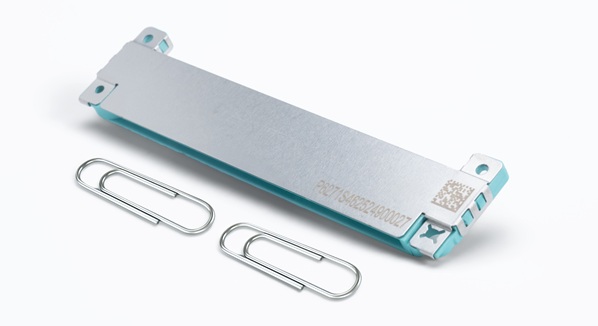
Ventiva’s ionic cooling technology takes a fundamentally different approach: enabling targeted, zoned cooling that delivers airflow precisely where it’s needed. The Ventiva thermal management subsystem is comprised of a tightly integrated Ventiva device (or devices), fin stack, and vapor chamber or heat pipe. Because the devices are thin, scalable in length, and completely silent, they can be placed directly at the heat source rather than somewhere upstream of it. Voltage regulators, Network Interface Cards, BOSS modules, DIMMs: components that have historically been “thermal orphans,” finally get the targeted airflow they need to stay within spec.
Modular by Design
What makes this targeted cooling possible is meaningful modularity. Each Ventiva device is a self-contained air blower that delivers targeted airflow to an independent thermal zone, and can be placed, scaled, and tuned precisely where heat density demands it.
Traditional cooling systems are centralized. One or two large fans attempt to solve for the entire thermal envelope, forcing system designers to over-provision airflow to protect the hottest component. Ventiva’s approach decentralizes and decouples cooling. Instead of blasting air across the whole chassis, designers deploy airflow exactly at the source or in self-contained cooling zones–without needing to redesign the entire system architecture around bulky fan bays.
Because the devices are thin and feature a side-in, side-out airflow pattern, they can be sandwiched directly between tightly stacked components or shifted to the back of a system in a discrete cooling zone. This enables true targeted cooling: multiple modules can operate in parallel, each addressing a specific thermal load. Cooling becomes additive and scalable rather than monolithic and fixed.
This is what makes the modularity meaningful. It gives system architects the freedom to design around compute and memory placement first, apply cooling precisely where it is required rather than shaping the system around the constraints of a centralized blower.
Built for Where Devices Are Going
Physics is on Ventiva’s side. As device sizes shrink even further, axial fans lose performance disproportionately: there simply isn’t enough diameter for their impellers to generate meaningful airflow. Ventiva’s solution scales linearly, meaning its advantage grows as form factors get smaller. For AR/VR headsets, handhelds, ultra-thin AI laptops, and thermally crunched zones at the rear of direct-to-chip cooled server applications, this hyper-targeted cooling is becoming a necessity.
When every square millimeter of space counts, purposeful placement beats raw power. And Ventiva’s ionic cooling solutions are designed to do exactly that, silently and at scale.
Thermal constraints shouldn’t dictate system architecture. Learn more about Ventiva technology and how it helps designers put compute first.
# # #